We started Top Travel Bloggers in India as an informational list, but it turned out to be inspirational as we got to know more about each of these amazing India Travel Bloggers. The individuals interviewed here have diverse backgrounds – some of them left their corporate jobs to pursue travel full-time, some of them found meaning to their lives through travel and some of them started blogging to inspire others to travel more.
However, there is one thing common among these bloggers – They love India and they glorify our country with their inspirational travelogues! Get Inspired from these blogger stories, connect with them and above all START TRAVELING! You never know who you will meet on your next journey!
Note: This is by no means a comprehensive list. We might have missed some amazing India travel bloggers. Please contact us If you think that you should be featured on this list.
Top Travel Bloggers in India in 2022
1. Sharell Cook – TripSavvy

Blog: TripSavvy India
What is it about:
It’s an informational website, an online travel guide, about what to see and do in India, where to stay, and other travel tips.
Author Bio:
Sharell was born and raised in Australia and first visited India in 2000. She came back again in 2002, and again in 2005 to do some community work in Kolkata. After that, she never permanently left! She fell in love with an Indian guy and eventually married him. A friend of hers also offered Sharell a job looking after her guest house in Varkala, Kerala for a season — and that’s what made her decide to quit her job in Australia and move to India. She has lived in Mumbai since 2008. So far she has visited most states in India, but there will always be many more amazing destinations remaining.
Inspiration to start blogging:
Sharell was very keen for a career change (She previously worked as an accountant) and after spending substantial time traveling around India, she realized that she wanted to write. In particular, she wanted to write about India’s travel because it’s what really inspired her and made her feel so alive. India is such a diverse and fascinating country, with so many treasures, and she wanted to share them with the world. She started out by writing India travel articles for an article library website and then not long after, she joined About.com in her current role, which is writing and managing all the content for their India travel website. When Sharell started working for About.com six years ago, the website had zero content and zero readers. So, she had to create it all from scratch, and she has gradually built it up to be what it is today. She feels so blessed to have discovered her passion, and that it is now her job.
Sharell certainly finds a place in the list of Top Travel Bloggers in India.
2. Ajay Jain – Kunzum

Blog: Kunzum
What is it about:
We travel. What do you do? This sums up the spirit at Kunzum, where traveling is a way of life. Enabling them to bring stories in the form of blog posts, paper and electronic books, photos and videos.
Author Bio:
Ajay Jain is a writer and a photographer, focused mainly on travel. He has authored eight paperback books and over 40 e-books.
Inspiration to start blogging:
Having worked for newspapers and magazines, Ajay realized that their formats and agendas were very limiting. And traditional content is not available to readers when they want it, in a form they prefer. Nor did it allow interactivity with the author. Blogging addressed all these issues – and allowed him to define his own templates and editorial plans.
3. Arun Bhat – PaintedStork

Blog: India Travel & Photography Blog
What is it about:
India Travel & Photography Blog is a regularly updated collection of stories and visuals of places and people across India and nearby countries. Updated by professional travel photographer and writer, this blog is now on its tenth year and has reported stories from every corner of the country.
Author Bio:
Arun Bhat is a photographer and travel writer based in Bangalore. He spends much of his time traveling through the country, documenting its riches with his writing and images. He is also a founder at Darter Photography, which nurtures photography enthusiasts through tours and workshops.
Inspiration to start blogging:
India Travel & Photography Blog first began as a space to document my journeys, which had then just started becoming frequent (in 2005). The response and the involvement of the audience were surprising as well as encouraging, which allowed me to convert the space from a personal journal of journeys to a meticulously maintained travel blog.
4. Mridula Dwivedi – TravelTales

Blog: Travel Tales from India
What is it about:
As the name suggests the blog is about Mridula’s travels both within India and abroad.
Author Bio:
Mridula loves to trek and travel, in that order. In her day job, she is a professor in a private college in Gurgaon. She did her Ph.D. from the Indian Institute of Technology, Kanpur.
Inspiration to start blogging:
Her sister and her brother-in-law started blogging before her, and they did not give her any peace till she too got a blog!
Mridula finds a place in the list of Top Travel Bloggers in India.
5. Mariellen Ward – BreatheDreamGo

Blog: BreatheDreamGo
What is it about:
Breathedreamgo is a travel blog about “meaningful adventure travel”. It is inspired by founder Mariellen Ward’s extensive travels in India over the past nine years. Though Canadian by birth, Mariellen considers India to be the culture of her soul. On Breathedreamgo, Mariellen shares tales of travel and transformation, photos, videos and tips and advice on traveling, blogging, and writing.
Author Bio:
Mariellen Ward is a professional travel writer, blogger, editor and content and social media marketing expert based in Toronto (and sometimes Delhi). BreatheDreamGo, her award-winning travel blog about “meaningful adventure travel” is inspired by her extensive travels in India. She writes for many print and online sites; self-published a book of travel stories, Song of India; co-founded the Toronto Travel Massive and the Delhi Travel Massive; and started the WeGoSolo online community for female solo travelers. Mariellen is a Kensington Tours Explorer-in-Residence and the recipient of an Explorer’s Grant, which she will use to trace the life of Mirabai in north India in October 2014.
Inspiration to start blogging:
About a dozen years ago, she was trying to recover from grief and depression, and she threw herself into yoga. While studying yoga, she suddenly felt compelled to go to India. She planned, saved, packed up and left Toronto for Delhi on December 5, 2005, for a six-month trip. She kept a travel blog during the entire trip, and that was how it all started: her passion for travel writing, blogging, and India. Since then, her casual blog for friends and family only has morphed into a professional level blog — She launched Breathedreamgo on Ganesh Chaturthi, August 23, 2009 — and she has been back to India about six times. Now, she is “following her bliss” and doing what she loves fulltime – Travelling in India, writing, studying yoga and spirituality and engaging online with like-minded souls.
6. Sankara Subramanian – BeOnTheRoad
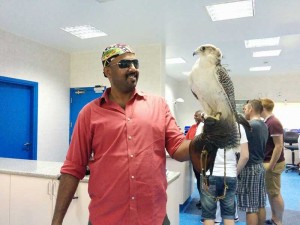
Blog: Be on the Road
What is it about:
Travel Blog of an Indian Globetrotter who indulges in Adventure Travel, Wildlife Holidays, Unique Cultures, Backpacking, Budget Travel, and Vegetarian Food.
Author Bio:
Sankara is a traveler at heart who left his white collared corporate IT job to explore the world and make a career in blogging.
Inspiration to start blogging:
Sankara never had an inkling of an idea that he would start a blog, but a lot of his friends and family were keen to know more about his travel stories and thus began his travel blog. Hence, his inspiration has been his family and friends.
Shankara certainly finds a place in the list of Top Travel Bloggers in India.
7. Shivya Nath – ShootingStar

Blog: Shooting Star
What is it about:
The Shooting Star is the home of all Shivya’s travels, and she hopes to inspire you to step out of your comfort zone and discover the world.
Author Bio:
Shivya quit her corporate job in 2011, at age 23, and decided to travel the world. She has lived with the White Thai tribe in a remote Vietnamese village, hitch-hiked along Turkey’s Black Sea coast, swum with black-tip sharks on Malaysia’s east coast, spent a night in the highest inhabited village of the Himalayas, and fallen in love with so many people and places.
Inspiration to start blogging:
Shivya grew up in a protective Indian family in Dehradun, a small town at the base of the Himalayas, and spent her childhood wondering what lay beyond the mountains she could see from her roof. Upon finishing high school, she went to Singapore to study, with big dreams and a big student loan. As luck would have it, she graduated in the middle of the financial recession of 2009, when most companies she wanted to work with had ceased their hiring. She landed a job with the Singapore Tourism Board, where she learned everything she knew about social media and started following the journey of travel bloggers across the world.
It was impossible to tame her restless cubicle-bound soul, so in 2011, she took a 2-month sabbatical from work. She went flash-packing across Western Europe with a friend and volunteer-traveled in the high Himalayas of India. In those two months, she saw, experienced and lived more than she ever had before, and decided to quit her first and only corporate job with the dream of traveling the world on her own terms.
8. Siddhartha Joshi – SidTheWanderer

Blog: The Wanderer
What is it about:
The Wanderer is a Travel and Living blog from India, though it’s not bound by any boundaries. It’s a space to share stories to inspire and provide practical tips on traveling across the globe.
Author Bio:
Siddhartha is a designer, traveler, and travel blogger who loves people more than anything else. He derives his passion for interacting with the people for whom he designs the products as well as from the people he meets with during his travels.
Inspiration to start blogging:
It was Siddhartha’s inherent desire to share what he had learned through traveling with the world and also to inspire others to travel and explore the world more. He truly believes that only traveling can break barriers and make us more tolerant and accepting of our differences. He hopes that sometime in his lifetime, there would be a world without visas and boundaries and perhaps travel blogging can help in that.
Siddhartha is one of the Top Travel Bloggers in India.
9. Arti S – MyYatraDiary

Blog: My Yatra Diary
What is it about:
Arti’s blog is focused primarily on her yatras and chronicles her travel experiences that cover an array of articles right from where she stayed, what she ate, the places she visited, the people she met, etc, It is almost like embarking on the same journey again! Her main aim is to help people plan their trips better. In addition to all the information, she also makes sure to supplement the posts with a lot of pictures in an endeavor to inspire more and more people to pack their bags, set out and travel.
Author Bio:
Arti is a 20 something girl with an inherited travel gene, thanks to her beautiful wanderlust parents. She is on the pilgrimage of her life, learning different values, discovering new cultures, breathing life into experiences, talking to wonderful people, walking the roads and above all, trying to find the right direction for herself.
Inspiration to start blogging:
The inspiration came to her from the yatras she took with her family. Whenever they made any travel plans, she would find it difficult to get the relevant first-hand customer experience details on hotels and food on the web. Google would throw up loads of links but what was missing were first-hand user reviews and even if they existed, they were few and far between. She had the names and the tariffs but what she wanted were the photographs and personal evaluation from credible sources that would help her decide if she really wanted to stay in that hotel. Absence of that information inspired her to fill a gap that possibly existed and this is what paved the way for the creation of ‘My Yatra Diary’.
However, since then, it’s gone on to become something more and is now helping her grow in her personal journey as well.
10. Ruchika Vyas – TravellerStories

Blog: Traveller Stories
What is it about:
Converting strangers into friends, uncovering lesser-known places, trying something scary, breaking the rules and simply saying “Forget it, let’s go, we’ll see what happens.”—that for Ruchika is what traveling is all about, and that is what the blog reflects. Traveller Stories is a platform to share tips and anecdotes about destinations, information that is useful for readers, and updates on ‘happenings’ of the travel world.
Author Bio:
Ruchika has been a writer and editor for eight years, owner of a chocolatier for two years, a TV show addict for six years, and a happy traveler since the day she hopped into the general compartment of the Kanyakumari Express on a RAC ticket. Her work has been published in Conde Nast Traveller.in, Mumbai Mirror, CNNGo.com, and Femina. She is also one of the contributing writers of Outlook Traveller Getaways’ book – Driving Holidays Across India.
Inspiration to start blogging:
When Ruchika first began traveling, most of her friends were very surprised because she wasn’t one of those people who had always harbored the desire to explore the world. It literally just happened one fine day. When she returned from her first solo trip, she was bombarded with questions about traveling alone, about the destination she visited and, of course, photographs. She simply wanted to collate all her travel experiences on one platform to be able to share them with anyone who was interested in traveling. And so, Traveller Stories began.
Ruchika certainly finds a place in the list of Top Travel Bloggers in India.
11. Shrinidhi Hande – eNidhi

Blog: eNidhi India
What is it about:
A personal blog by Shrinidhi Hande, focusing on travel, automobiles & reviews.
Author Bio:
Shrinidhi Hande is a full time IT professional and has been blogging since 2006. He enjoys travel, long drives, chess, reading and photography.
Inspiration to start blogging:
Earlier Shrinidhi used to send articles to print media. It used to take a long time to get published, if at all. The blog was an instant medium with better reach, quicker feedback, and more freedom.
12. JD Viharini – EnjoyingIndia

Blog: Enjoying India
What is it about:
Insights, tips, photos and news to enrich your experience of India.
Author Bio:
Viharini is a single woman who has lived and traveled alone extensively in India. She was born in California but has spent more than two-thirds of her life in other states and other countries. Having earned an MS in Vedic Studies in Europe, she came to India in 1980 and loved it immediately. Now she has been living in India for several years.
Although Viharini has an apartment in a remote village high in the Himalayas that’s her home base, she tends to move around India with the seasons. Over the years, she has traveled around India first-class, sardine class, and everything in between. She has made many friends and has come to regard India as her home.
Inspiration to start blogging:
When Viharini launched her book, Enjoying India: The Essential Handbook, she felt that she needed to start a blog to go along with it. Her whole thing is helping people enjoy their time in India, and blogging is just another way to do it.
Viharini finds a place in the list of Top Travel Bloggers in India.
13. Srinivas Kulkarni – TravelTales

Blog: Travel Tales
What is it about:
To traverse beyond the limitations of his mind, Srini travels to look upon the journey within himself. His blog is the place to share that journey with you. He writes mostly stories about people, places and the journey that he encounters. The Himalayas are a place which is close to his heart and he has been going there for 5 years and has made it a ritual to go every year. You’ll find a lot of blogs from the Himalayan region on his website.
Author Bio:
Srini is a Wandering Thinker, Pondering Writer, and an Avid Traveler. He has traveled to various parts of India and writes interesting stories of people and places that he experiences. He aspires to be a travel author one day and hopes to write a magnanimous journey of his sojourns across the world!
Inspiration to start blogging:
Srini has always enjoyed writing! It has been his first love. Back in 2006, he had this thought of becoming a better writer, but to do that, he believed that it was important to broaden his horizons. To be well-traveled is to be well-read! And that’s when he decided to take up traveling and slowly and steadily started working towards taking as many trips as he could and write about them. His goal is to travel the world and weave stories about his sojourns to leave a legacy behind when he is gone.
14. Sudha Ganapathi – Sudhagee

Blog: Sudhagee
What is it about:
My Favourite Thingsreflects Sudha’s multiple interests in travel & photography, books, music, Mumbai, and much more. It is a blog on topics that matter to her, on topics that interest her, and on topics that she wants to contribute her two cents to.
Author Bio:
Sudha is one of the founders of #TSBC (The Sunday Book Club), an armchair and actual traveler, an editor, a communications consultant, a click-happy photographer, classical music (Indian, Western and Arabic) lover, a mythology enthusiast, a closet graphic designer, a foodie… She is all that, this and more!
Inspiration to start blogging:
It was sheer boredom that made her start blogging. Sudha certainly finds a place in the list of Top Travel Bloggers in India.
15. Prasad Np – desiTraveler

Blog: desi Traveler
What is it about:
A family travel blog from India with stories and pictures about destinations that desi families love visiting together like beaches, wildlife sanctuaries, pilgrimages, etc.
Author Bio:
Prasad is a corporate executive who has worked at C level for more than a decade in Fortune 100 companies, managing the India Operations. He now invests in Start-ups and advises them on strategy. He would love to travel more than he does currently.
Inspiration to start blogging:
India.
16. Puru Ekta – ShadowsGalore

Blog: Shadows Galore
What is it about:
Shadows Galore is a weblog, where Puru and Ekta share their travel experiences, photographs, lifestyle ideas, memoirs and more.
Author Bio:
Puru and Ekta are IT professionals based in Pune. They love traveling to new destinations in their free time. Apart from travel, Puru loves photography and blogging while Ekta enjoys planning their trips and adventure sports.
Inspiration to start blogging:
Shadows Galore started as a photo-blog on Blogspot to fulfill the requirements of a photography competition sometime back in 2010. As they were traveling to a lot of interesting places during their college days, they decided to record their experiences in the form of a blog.
Puru and Ekta find a place in the list of Top Travel Bloggers in India.
17. Dheeraj Sharma – DevilOnWheels

Blog: Devil on Wheels
What is it about:
It’s all simply about Traveling to the Himalayas and you can expect travel updates, news, experiences, pictures, learning, thoughts, tips, guides, routes, maps, suggestions, reviews, etc.. all under one place. That is what is DoW (Travel, Off The Road…..).
It is an effort to create a travel community of likeminded people dedicated to the Himalayas. They share practical and insightful travel information related to the Himalayas that may help others to enjoy what nature offers us but with ease and with a difference and in turn giving the actual benefit back to the Himalayan Lives by their Responsible Travel Initiatives such as DoW Causes, Drivers Portfolios, etc.
Author Bio:
Dheeraj Sharma is an avid Traveler, a rookie shutterbug, a die-hard Leh – Ladakh lover, with a strong passion for driving whilst exploring new places & sharing those experiences with fellow Travelers. Lately, he found that using your passion to dive into the unknown and testing your limits of soul and body really boosts your individuality. Since then he never looked back. He loves to capture the beauty of nature in his camera or simply say “Nature/Landscape Photography”. Frequently, he gets on his wheels to hunt this unsatisfied hunger of capturing & learning from the endless things which nature offers us.
Before he dies, he would love to summit at least 5 peaks starting from 5000-7500 Meters or maybe more if god, luck and physical fitness allow him to do so. Just as everything starts with a cause, so do this whole chapter of Traveling in his life.
Inspiration to start blogging:
For Dheeraj, Travel is a Reason to Believe, Smile, Love, Learn, Connect and Feel ALIVE!!
Down, out, alone and almost surrendered to the most difficult phase of his life, he suddenly thought of pursuing his passion of driving and traveling to re-start his life again, take it a step further and explore if nature has the magic to can save him and turn him into the person he once was as a child. The Himalayas always had a history of being associated with peace and calmness, so he decided to have a treatment called “Nirvana @ Himalayas”. He went out into the wild to find out answers to many disturbing questions which haunted him every moment, top of the list being “Me or Devil??” The answer lies in his transformation as a person after traveling over the last four years which allowed him to look @ LIFE so beautifully, making fun of every moment without considering the days passed or the days ahead. There is only one Life and now he feels that it should be ALIVE and AWESOME, always.
Dheeraj is one of the Top Travel Bloggers in India.
18. Lakshmi Sharath – TravelWithLakshmi

Blog: Travel Blog of an Indian Backpacker
What is it about:
A travel blog of an Indian Backpacker.
Author Bio:
Lakshmi is a media professional, a traveler, travel writer, blogger, and photographer. After 15 years of sitting beside a desk in several media organizations, she decided to travel and see the world. She has covered five continents and been to over 25 countries and her passion lies in exploring the nooks of India as well.
Inspiration to start blogging:
Lakshmi’s mother always used to say that as a child she used to run around like as if she had wheels on her feet. Eventually, the desire to step outside her comfort zone, to meet people and lose herself in different landscapes – both culturally and naturally, is what got her to travel. She started blogging to share her experiences and to meet like-minded people. She was in a corporate job when she first started blogging but eventually, she got so addicted to the same, that she quit her media career of 12 years to blog and travel.
19. Anuradha Shankar – AWanderingMind

Blog: A Wandering Mind
What is it about:
A Wandering Mind is mainly about Anuradha’s travels, but as the name suggests, she wanders every now and then to other topics too, such as her son and the happenings around her.
Author Bio:
Anuradha was one of those who was very sure what she wanted to be – a scientist. The road seemed clear ahead as she completed her Master’s degree in Physics and enrolled for a Ph.D. That is when life took one of its sudden turns, and she found herself abandoning her choice of career and looking for something to keep her occupied.
Inspiration to start blogging:
While Anuradha was still exploring her options, she got married, and re-discovered the joys of traveling, especially since her husband loved getting out of the city as much as she did! Soon, however, came the joys (and travails) of motherhood, and life took another turn as she found that everything for her now revolved around her son. Being the kind of person who cannot stay put in one place for too long, she was keen on doing something which would help her express herself, and that is when her sister-in-law suggested that she write a blog. She was skeptical about it at first, but once she got on to the bandwagon, she was hooked!
Anuradha certainly finds a place in the list of Top Travel Bloggers in India.
20. Anuradha Goyal – IndiTales

Blog: Indi Tales
What is it about:
This blog is about sharing Anu’s travel stories with a hope to hear back many more.
Author Bio:
Anuradha Goyal is the author of ‘The Mouse Charmers – Digital Pioneers of India’ and India’s leading travel and book blogger.
Inspiration to start blogging:
An instinct to experiment with the just-launched medium that blogs were when she started way back in 2004.
21. Niranjan Das – TalesOfANomad

Blog: Tales of a Nomad
What is it about:
‘Tales of a Nomad’ is a travel blog where Niranjan pens down his travel experiences. It has articles about places traversed, blissful roads are taken, interactions with strangers, exhilarating adventures and frames captured.
Author Bio:
Niranjan is passionate about travel, be it long bike rides or treacherous trekking or leisure holidaying or backpacking through the countryside or an engrossing train journey. He dreams of setting foot on every single country on planet earth, meeting adorable strangers and learning about new cultures.
Inspiration to start blogging:
Tales of a Nomad started off as a personal blog where Niranjan could pen down his travel memories. Now, this blog has become his travel diary where he writes almost every day, to inspire people to travel to all the lovely destinations out there. The inspiration to start a travel blog is undoubtedly traveling itself.
Niranjan finds a place in the list of Top Travel Bloggers in India.
22. Rachel Jones – HippeInHeels

Blog: Hippie in Heels
What is it about:
Hippie in Heels is the go-to website for showcasing India’s fun side. With a focus on glamorous travel without spending a fortune, this is the site to find luxury guides, boutique hotels, fabulous meals, packing tips, and local designers- all while balancing the beautiful chaos of India. Rachel gives tips to females who are nervous to come and eases fears. Rachel tells about the secret trendy places in the other 24 countries she’s been to. In under a year, Hippie in Heels has taken off as a travel blog inspiring people to come to India and make people laugh with her Friday story series, “This is India!”
Author Bio:
Living in Goa year-round for two years, Rachel is an expert on travel within the state and has really dove into the culture of India as a whole. After years of international travel from Africa to Europe, she left nursing to follow her dreams of living abroad after finally falling in love with Goa, and has since become a Thai masseuse in India. Knowing she’ll be in India a while, other than her blog, Hippie in Heels, she’s learning Hindi, loving the monsoons, studying yoga, traveling the world (especially India), and starting a small candle company.
Inspiration to start blogging:
Rachel was inspired to start blogging when she realized that she couldn’t keep up with all the random people’s facebook messaging and e-mailing her for advice. Friends urged her to share her knowledge of India to a wider audience. Knowing she was a contradiction: hippie at heart, but the girly girl on the outside- Hippie in Heels was born.
23. Ankita Sinha – AnkiOnTheMove

Blog: AnkiOnTheMove
What is it about:
Standing on the core foundation of Places, People, Adventure, Travel, and Style; Ankionthemove is a two and a half-year-old Blog where ‘India and Abroad’ are brought to the virtual world of travel enthusiasts with much love in the form of Self-descriptive 3-5 minute Travel Videos and Conversational Write-ups. The blog also contains information on the upcoming Adventure Sports scenario in the country and takes you to ‘behind the scenes’ about people who conduct them. Added to that are the various Travel Meetups, Colorful Events, Style While Travel and glimpses from her own personal life. Featured in Fox Traveller, Deccan Chronicle, Elle, 104.8 FM, and many others, this blog surely takes you to a fulfilled ride across 13 Countries, 24 states, 15 Adventure Sports and 115 Travel videos.
Author Bio:
Quitting her previous Software Experience of 5 years wasn’t a decision. It was a choice of passion for routine. Since then, the jobs changed to being a Marketing Professional in an Adventure Firm to now a Marketing Professional in Skyriders which conducts Skydiving in India. It is through her job, that she collects the insights on how Adventure has evolved over the years. The need to bridge the gap of not knowing where to find Adventure Sports is what makes both the job and the purpose worthwhile.
Inspiration to start blogging:
The great satisfaction of being helpful to people who might dream of traveling but for some reason couldn’t is what made Ankita start a blog. It started off really small with capturing the essence of Bangalore, and capturing it in a way which is not just a random read, but a purpose which both her and her readers mutually share – a blog with a soul and a heart and plenty of information and experience as well as travel videos to simply “believe, plan, make and happen travel & sports”
Ankita is one of the Top Travel Bloggers in India.
For the viewers – Do you love traveling? Do you have an inspirational travel story to share with us? Please share it in the comments section