• Skip to primary navigation
  • Skip to main content

Myoksha Travels

Powered by The Temple Girl

  • Temple Tours
  • Jyotirlinga in Maharashtra
  • Dwarka Somnath Tour
  • Char Dham Yatra 2026
  • Panch Dwarka Temples
  • Jyotirlinga in India
  • Contact Us

Guide to Pujas, Festivals and Homas

[display_search_form]

Pitru Paksha 2019 – Start Date, End Date, Significance of Shraddh

October 8, 2019, Sasidhar Darla 2 Comments Filed Under: Pujas

Pitru Paksha 2019: Pitru Paksha, a 16 day lunar period in Hindu calendar begins on Friday, September 13 and concludes on Saturday, September 28. Pitru Paksha is a ritual performed for the dead ancestors. Hindus pay homage to their ancestors during this period.

Pitru Paksha is also known as Pitru Pakshya, Pitri Pokkho, Sola Shraddha, Kanagat, Jitiya, Mahalaya Paksha and Apara Paksha. The word ‘Pitras’ means ‘Ancestors’ and ‘Paksha’ means ‘A particular time’. It is considered to be an inauspicious time. No good task is done during this period.

During the ceremony, the death rites that are performed is termed ‘Tarpan’ or ‘Shraddha’. It is believed that performing the Pitru Dosha blesses the entire family. It is performed only by the male members of the family.

Pitru Paksha 2019 Dates

DateDayShraddha
13 September 2019FridayPurnima Shraddha
14 September 2019SaturdayPratipada Shraddha
15 September 2019SundayDwitiya Shraddha
16 September 2019MondayTritiya Shraddha
17 September 2019TuesdayChaturthi Shraddha
18 September 2019WednesdayMaha Bharani, Panchami Shraddha
19 September 2019ThursdayShashti Shraddha
20 September 2019FridaySaptami Shraddha
21 September 2019SaturdayAshtami Shraddha
22 September 2019SundayNavami Shraddha
23 September 2019MondayDashami Shraddha
24 September 2019TuesdayEkadashi Shraddha
25 September 2019WednesdayDwadashi Shraddha
26 September 2019ThursdayTrayadoshi Shraddha
27 September 2019FridayMagha Shraddha
28 September 2019SaturdaySarva Pitra Amavasya

Why do we perform Pitru Paksha?

Pitru Paksha Cost & Benefits

We perform Pitru Paksha Puja because:

  • It ensures that the ancestors go to heaven.
  • It is believed that the live members of the family won’t be in peace if the ancestors are not resting in peace. The family will keep facing some of the other problems.
  • Not performing the puja can make the women of the family not have children.
  • It ensures that the ancestors rest in peace by clearing their sins.

What is the history of Pitru Paksha ritual?

According to mythology, the reason for performing Pitru Paksha relates to King Karna, the son of the Sun God from Mahabharata. King Karna was always deeply involved in charity and could never say no to anybody. After his death in the Mahabharat war, when he went to heaven, he was offered food made of gold. 

He asked the Gods why such a great was offered food this way even after doing so much charity. He was told that this was because he only offered gold as a charity and not food. King Karna neither offered food and water to his ancestors nor the poor people. Realizing his mistake, King Karna wanted to correct it. The Gods thus decided to let Karna return to Earth for 15 days to feed the poor. This helped him to get rid of the problem. This period is called Pitru Paksha.

Who can perform Pitru Paksha ritual?

The son of the dead ancestor performs the Pitru Paksha. If the person has no son, any other male member can perform the Puja. In cases where a person has more than one son, the eldest son performs the Puja.

Where do we perform Pitru Karma?

  • One can perform the Puja in a lake beside their house.
  • They can also perform this Puja at the banks of a river.
  • One can also visit Gaya or Varanasi to perform the Puja.
Pitru Paksha Pooja Place - Ganga
Pitru Paksha Pooja Place – Ganga

Materials required to perform Pitru Paksha 2019

The materials required to perform Pitru Paksha are:

  • White rice, A bucket of water, Piece of Kush grass (with roots attached), and Black till for performing the Tarpan.
  • Ghee, 5 pairs of Puri/Suhari and Sweet rice, Black Till, Camphor, 1 Diya, Wood, Mango leaves, Lota with water and prepared food to take outside for performing the Havan.
  • Prepared meals, or 3 or 5 pairs of Suhari/Puri and sweet rice for performing the Bhojan.
Pitru Paksha Materials Required for Pooja

How to perform Pitru Paksha in 2019?

The ceremony of Pitru Paksha consists of three parts. These are:

  • Tarpan
  • Havana
  • Bhojan

Method of offering Tarpan:

  • Mix the black till and white rice into the bucket of water. After that plant the Kush grass on the southern side of you. Then tie the Kush grass into a knot.
  • Join your hands together and allow the water to scoop down your palms.
  • Face the east and offer the ‘Jal’ with hands to the sun and recite 3 times, “Om Sri Suriyaayaai Namah.”
  • Face the south and offer Tarpan with hands to the deceased ancestor. Do it 3 times for each ancestor in the following way: (Call the name of deceased) and recite “Pitra Swaadhaa”.
  • Offer Tarpan 3 times. Say “Sarva Pitra Swaadhaa”

Method of performing Havan:

  • Face south with the Havan Kund in front of. Say “Om Namo Narayana Namah” seven times. Spend a few moments reflecting on the forefathers who are honoured with Pitra Havan.
  • Set the fire and make ghee offerings to the forefathers. Recite the same mantras as the Tarpan.
  • Mix the ghee, black till, puri and sweet rice together.
  • Make the offerings like the Tarpan using this mixture.
  • Take the prepared food for forefathers outside.

Method of performing Bhojan:

  • At least three people should accompany you.
  • Take the food and a lighting piece of stick or camphor to the back of your house.
  • Place the fire down and the food and water down in a neat way.
  • Pause for a while to seek the protection of these souls and then turn around and leave.
  • You should not look at the food you have offered.
Pitru Paksha Tarpan Ceremony
Pitru Paksha Havan Ceremony
Pitru Paksha Bhojan Ceremony

What are the rules for performing the Pitru Paksha ritual?

The rules for performing the Pitru Paksha are:

  • The male performing the Puja should bathe before performing the Puja.
  • The male performing the Puja should wear a Dhoti.
  • He should wear a ‘Kush Grass’ ring.
  • He should be bare-chested.
  • The person performing the Puja should not have anything negative in his mind.
  • Do not do anything ‘new’ during this time. Like engagement, wedding, buying property etc.
  • Avoid eating non-vegetarian food, onion, garlic, jeera, mustard oil etc.
  • Do not harm any living beings during this period.

What is the cost of performing Pitru Paksha?

The cost of performing Pitru Paksha starts from as low as Rs 25 and can go up to Rs 5000.

The pandit performs the puja for a group of people together at the lower budget and the size of the group decreases with the increase in the budget. The budget ranges from Rs 2500-5000 if a Pandit dedicates himself to perform your Puja. This includes the cost of ingredients and donations.

If you have any queries related to Pitru Paksha Pooja, please leave a comment and we will reply within an hour.

Related Videos on Pitru Paksha

Related Posts on Pitru Paksha

Pitra Dosh Puja
Pitra Dosh Puja
Explore Haridwar
Haridwar is one of the Sapta Puris, which are the seven holiest places for the Hindus.

Pavamana Homam – Benefits, Procedure and Cost

March 7, 2020, Sasidhar Darla 29 Comments Filed Under: Homa

Pavamana Homam is a ritual performed to put an end to all your sins and bad karmas you have accumulated in life. You might be experiencing the bad effects of karma of your past lives without even knowing it. This homam cleanses your soul and brings purity in your life.

To perform Homam: Email info@myoksha.com

Pavamana homam is a word derived from the Dravidian language. According to it, ‘Pavam’ means to sin and ‘Mana’ means to negate. Vedic astrologers also recommend this homam to correct one’s horoscope.

Who is Lord Pavamana?

Pavamana is a group of Gods who reduce your sins and bring positivity and prosperity in life. The group consists of Lord Vishnu, Lord Hanuman, Lord Bharati, Somadeva, Agnideva, and goddess Ganga. These Gods are individually invoked and summoned in a kalasha – a holy sacred pot. Then, they are worshiped for a mandala which is a period of 45 days.

What are the benefits of performing Pavamana Homam?

Here are the list of benefits of performing Pavamana Homam:

  1. We should perform this homam to negate all the sins we have done unknowingly. The sins can be in the form of violence, insulting elders, stealing, lying, etc.
  2. This Homam cleanses your soul and makes your mind pure.
  3. It purifies your life and destroys all your sins.
  4. It negates all your present as well as past lives sins.
  5. This homam brings prosperity and wealth in the life of its devotees.
  6. One can achieve peace of mind and calmness with it.
  7. It shows you the path of salvation and helps in achieving moksha.

Who should perform Pavamana Homam?

Here’s who should do Pavamana Homam:

  • People who are suffering from the bad karmas of their past lives and it is affecting their present life. They should perform this homam to get rid of past-life karmas.
  • Those who want to achieve salvation and peace of mind.
  • As per astrologer’s advice, we can perform this homam to correct our stars and horoscopes.

What are the best days to do Pavamana Homam?

Thai Amavasya, also known as Magha Amavasya or Mauni Amavasya, is an auspicious day to perform Pavamana Homam. There is a belief that water of holy Ganga river turns into a sweet nectar on the day of Mauni Amavasya. Hence, it is very fruitful to take a holy dip in Ganga river on that day.

Other good days to perform this homam are:

  • Ekadashi, Poornima, Saturdays are also auspicious dates for Pavamana Homam.
  • Vedic astrologers also decides the dates for this homam according to your horoscope.

What is the procedure for performing Pavamana Homam?

Time needed: 1 hour

Here’s how to do Pavamana Homam at home:

  1. Summoning Gods

    The clang of Gods is first invoked and summoned in the puja.

  2. Kalasha Sthapna

    We place a Kalasha on Rice mandala. We then request Gods to situate there.

  3. Agni Prathisthapana

    We then light the fire inside the homam Kund along with camphor.

  4. Offerings and Samagri

    We have to offer milk, ghee, honey and fruits in puja.

  5. Chanting Mantras

    It contains 7010 mantras from Rig Veda. We should chant Pavamana Pancha Sookthas and Vishnu related mantras during this homam.

Pavamana Mantra

ॐ असतो मा सद्गमय ।,तमसो मा ज्योतिर्गमय ।,मृत्योर्मा अमृतं गमय ।,ॐ शान्तिः शान्तिः शान्तिः ॥

What are the materials required for this Homam?

The main materials required for Pavamana Homam are Ghee, milk, honey, and camphor. Fruits are also offered and distributed as prasada later. Besides this, one must have a homam Kunda (can be of bricks) and woods for fire.

Where to perform Pavamana Homam?

The procedure of this homam is so simple. Hence, a follower can perform this homam by himself or they can call a Pandit. One can perform this homam at their home or office. A lot of temples also offer the services of this homam.
Still, one should book the place and Pandit in advance and perform it on auspicious days only.

What is the cost of Pavamana Homam?

The cost of this puja is usually around Rs.5000. The cost includes the materials required and Dakshina for Pandit.

If you need any help regarding this Homam, feel free to leave a comment. We will give you a reply within an hour.

Navratri Puja 2019 – Procedure and Benefits | Online Booking

September 27, 2019, Sasidhar Darla 3 Comments Filed Under: Pujas

Navratri Puja Dates: 29 Sep 2019 to 7 Oct 2019 (9 Days)

Navratri Puja is performed to worship the nine different forms of Goddess Durga for nine continuous days. This year in 2019, Navratri is beginning from Sunday, September 29 and ending on Monday, October 7. Navratri means 9 sacred days. A distinct avatar of Goddess Durga is worshipped on each of the nine days. Read how to do the Navratri Puja, Step by Step Procedure, Significance and Benefits.

Navratri Puja 2019 – Everything You Need To Know

Navratri Dates 201929 September 2019 – 7 October 2019
Type of NavratriSharadiya Navratri or Maha Navratri
(Celebrated in Sep-Oct)
No. of Days Celebrated9
Goddess WorshippedNine Forms of Goddess Durga
Important DayMaha Navami (9th Day)
PoojaKanya Laangura Bhoj
Fasting Days (Vrat) 1st, 8th and 9th Day of Navratri
Related Festivals Dussehra and Diwali
Celebration in IndiaGarba Dance in Gujarat & Mumbai

Who should perform Navratri Puja?

  • People who want to get success in life with the blessings of Goddess Durga can perform this puja.
  • If someone is facing any financial issues or any family problems, then performing this puja will help them to get rid of this issue. 
  • This puja is also very beneficial for getting the peace of mind.

Why is Navratri celebrated?

Navratri or Durga Puja is celebrated as a symbol of victory of good over evil. As per legend, Goddess Durga defeated the demon king Mahishasura to save the world and restore Dharma. In South India, Navratri is celebrated to mark the victory of Lord Rama over the demon king Ravana. In North India, it is celebrated on the day of Dussehra, commonly known as Vijaya Dashami.

What are the benefits of doing Navratri Puja?

  • Worshipping the Goddess during the auspicious time period can bring a lot of benefits. One can receive wealth, prosperity in business and success in life after doing the puja.
  • One receives the divine blessings of Maa Durga after performing the Navratri puja.
  • People can also get rid of the sins performed during the previous births or the present life after performing this pooja.
  • Navratri pooja also helps to protect ourselves from bad spirits and to remove obstacles in life.
  • This pooja fulfils the wishes and desires of devotees performing it and relieved them from any diseases.
9 Forms of Durga on Navratri

When should I perform Navratri Puja?

The date and time for performing the Navratri Puja are based on the Hindu Calendar. The dates are determined on the basis of Tithi and Nakshatras. Navratri Puja begins on the sixth day of Devi Paksha which is the beginning of the autumn season. This puja falls in the lunar month of Ashwin.

According to Hindu tithis, Navratri begins with Pratipada and ends with Navami. It is considered as the longest Hindu festival which is celebrated for nine days. Devotees worship Goddess Siddhidatri on the ninth day of Navratri which is the last and the most important day of Navratri. People celebrate the tenth day of Navratri as Vijayadashami to mark the victory of Lord Rama over demon Ravana.

See Panchang, Muhurat & Fast Timings for Navratri Puja & Maha Navami 2019 here

Which Goddesses are Worshipped during Navratri? (Navratri 9 Devi Names)

Navratri DayTithiGoddess WorshippedPoojasOfferingsColors of Navratri
29 SeptemberDay 1
Pratipada
ShailaputriGhatsthapana, Chandra Darshan, Shailaputri Puja GheeOrange
30 SeptemberDay 2
Dwitiya
BrahmachariniBrahmacharini PujaSugarWhite
1 OctoberDay 3
Tritiya
ChandraghantaSindoor Tritiya, Chandraghanta Puja, Varad Vinayak Chauth GheeRed
2 OctoberDay 4
Chaturthi
KushmandaKushmanda Puja, Upang Lalita Vrat MalupaRoyal Blue
3 OctoberDay 5
Panchami
SkandamataSkandamata PujaBananasYellow
4 OctoberDay 6
Shashthi
KatyayiniKatyayini PujaHoneyGreen
5 OctoberDay 7
Saptami
KaalratriKaalratri Puja, Saraswati Awahan JaggeryGrey
6 OctoberDay 8
Ashtami
MahagauriMahagauri Puja, Saraswati Puja, Durga Ashtami, Sandhi Puja CoconutPurple
7 OctoberDay 9
Navami
SiddhidatriSiddhidatri Puja, Maha Navami, Ayudha Puja, Navami Homa GrainsPeacock Green
8 OctoberDay 10
Dashami
—Navratri Parana, Durga Visarjan, Vijaya Dashami —

What are the Navratri Colors?

On Navratri, there is a tradition to wear dresses that represent the colours of Navratri on each of the 9 days. There are 9 different Navratri colours in 2019. Use these colours given below as a guide and make this Navratri more colourful. Navratri Color Sequence for 2019 below:

Navratri Colors for 2019 Infographic

How to perform Navratri Puja in 2019?

Step by step guide and procedure to perform Navratri Pooja is:

  • The first day of Navratri starts with the installation of Goddess Durga idol or picture in a clean upper place at home.
  • Devotees should do early morning pooja of Goddess Durga at home.
  • Goddess is decorated with kumkum, akshat, garlands, dresses and an aarti is sung in praise of Goddess Durga.
  • Devotees can also observe fast on the first day of Navratri.
  • The same pooja procedure is done for the next 8 days till the last day of Navratri.
  • When the last day came, a big pooja is held for the Goddess. Various food items are made at home.
  • On the last day, a Kanya Bhoj is done where small children, especially girls, are first worshipped and later served with food.
  • After that, devotees should also have the Prasadam of Goddess Durga.

What are the requirements for Navratri Puja?

The materials required for the Navratri pooja are: idol of goddess, deepak, agarbatti, kapoor, sari for offering to the goddess, pooja book containing all the aartis, Ganga water, flowers, sandalwood, kumkum, rice, banana, coconut, cloves, cardamom,supari, gulal, decorated kalash.

What is the cost of performing Navratri Puja?

The cost of the puja varies depending upon the samagri. The cost of this puja ranges from Rs. 2000 to Rs. 5000 depending upon the materials and consultation from the expert.

Garba Dance on Navratri

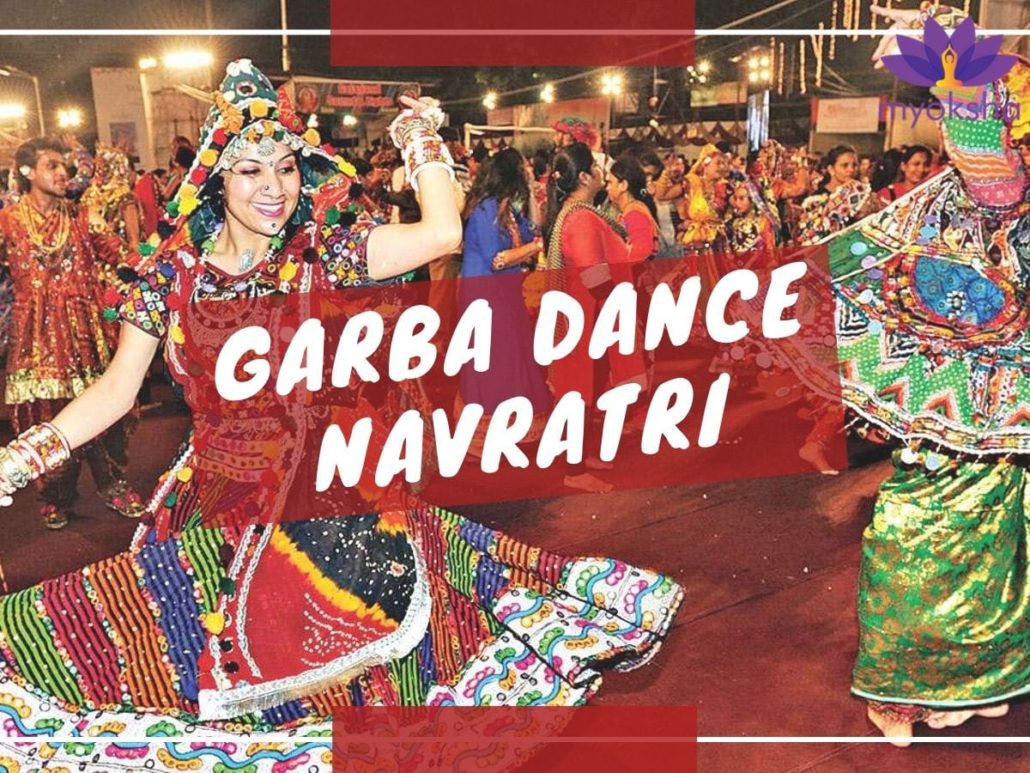
Garba dance is the most famous activity during Navratri and especially popular in Gujarat and Mumbai. Singing and dancing during Navratri is a part of festivity and fun and also a reason to dress up and catch up with your friends. It is also believed that singing and dancing in front of the Goddess is auspicious and brings good luck.

Navratri Garba Celebration

What are the other types of Navratri in a year?

Navratri Puja is also popularly known as ‘Durga Pooja.’ Very few people know that it is celebrated four times throughout the year. The name of four Navratri in a year are:

  • Paush/Magh Navratri (Jan-Feb)
  • Chaitra/Basanti Navratri (Mar-Apr)
  • Ashadh Navratri (Jun-Jul)
  • Shardiya Navratri (Sep-Oct) **Maha Navratri – Most Popular**

Only Shardiya Navratri and Chaitra Navratri are celebrated all over India. While the Paush and Ashad Navratri are not celebrated by common people.

If you have any questions about Navratri, please leave your comment below and we will get back to you super-fast.

Related Videos on Navratri

How to Do Simple Navratri Puja At Home | Procedure for Durga Puja at Home Step By Step
Navratri Fasting Tips By An Ayurveda Expert

Chandi Homam Benefits, Cost, Procedure, Online Booking

June 29, 2022, Sasidhar Darla 191 Comments Filed Under: Homa

Chandi Homam is a powerful homam performed to enjoy good health and happy family life. Chandi Homam is done to appease and seek blessings of Goddess Durga. The name Chandi is the other name of Goddess Durga as mentioned in Devi Mahatyam.

Book Chandi Homam Online

We arrange for chandi homam online. Contact us now.

Email Us
https://youtu.be/OfqcntPyHQg

The Homam is considered as the supreme form of worship among the followers of Shaktism (devotees who consider Devi or Adi Parashakti as the supreme God) sect in Hinduism.

The Goddess Chandi is represented as the fierce and passionate form of Goddess Durga. As per the Devi Mahatmayam, the Goddess is depicted as eighteen armed, each possessing a different weapon.

The Goddess is considered as the Mother of the Universe and an embodiment of feminine power and energy. She is also believed to be the creator of the Holy Trinity of Lord Brahma, Lord Vishnu, and Lord Shiva.

Who should perform Chandi Homam?

Here’s the list of people who should perform chandi homam:

  1. A person suffering from severe Doshas or ill-effects of planetary placements in their horoscope should perform Chandi Homam.
  2. Any person suspected to suffer from black magic, curses and negative energy are advised to perform the Homam to rid them of the evil influence.
  3. According to ancient scriptures, the Homam should be performed to overpower fear in general and especially fear of death.
  4. The Homam is also recommended for people who want atonement or forgiveness from the Goddess for any misdeed they might have committed in their life.
Chandika Homam
Chandika is the fierce form of Goddess Durga

What are the benefits of Chandi Homam?

Here’s a list of benefits of chandi homam:

  • It is believed that one can resolve issues related to health and family disputes by performing Chandi Homam.
  • The effects of curses and obstacles are removed from a person’s horoscope.
  • The Homam is performed to attain name, fame and success in the devotee’s life.
  • Performing the Homam grants success and a win over enemies or antagonistic elements in life.

When should I perform Chandi Homam?

The 9 days of Navratri are auspicious for performing Chandi Homam. Also, auspicious days like Ashtami, Navami, Chaturdasi, Magha Amavasya, Jyeshta Amavasya, Chaithra and Karthik Pournami are good for performing the Homam. It is preferred to perform the Homam during daytime and finish the rituals before sunset.

Chandi Homam Significance
Chandi Devi

What is the procedure to perform Chandi Homam?

Here’s how to perform chandi homam:

  1. The first few rituals are common for all rituals dedicated to God. Chandi Homam begins with Anujnaa (Permission from the Goddess), Acamanah (self-purification), Pranayama (to increase the spirituality inside the body), and Sankalp (take a vow to complete the ritual).
  2. The Ganapathi Pooja or Homam is conducted first to appease Lord Ganapathi without whose blessings, nothing is accomplished.
  3. The Kalasa Shuddhi process occurs next followed by the Agni Prathishthapana. This procedure involves the starting up of the fire inside the Homa Kundam with Camphor, dried coconut, and the Darbha grass. The Digpalaka Pooja is performed next to honour the rulers of the four directions.
  4. In an elaborate form of this Havan, the Panchopachara Pooja or the Shodasopachara Pooja are also performed.
  5. The Go-Pooja, Parivaara Pooja, Suhasini Pooja, Dampathi Pooja, and Brahmachari Pooja are performed before the Yagna.
  6. The Saptashati Parayanam is the main part of the Pooja. The thirteen chapters of the Saptashati have 3 parts dedicated to Mahakali, Mahalakshmi, and Mahasaraswati. These 13 chapters collectively contain 700 Shlokas that must be recited to complete the Homam.
  7. The last section of the Homam involves Uttarangam (Vote of Thanks) and the Poornahuti (Last offering).
Chandika Homam

What are the materials required for Chandi Homam?

The basic materials required for Chandi Homam are a Homa Kundam (a square shaped copper container), dry Coconut, Ghee, ladle, raw rice, kumkum, turmeric, Agarbattis (Incense sticks), lamps, Theertha vessels, flowers, and water.

Special food must be prepared that can be offered to the Goddess like fruits, jaggery or Panchamritham. The Darbha grass is optional along with Sesame seeds and Camphor.

Where to perform Chandi Homam?

Chandi Homam is an extremely elaborate Homam and is usually performed by several priests together in front of a large Homa Kunda. The Homam can be performed in all major Temples dedicated to Goddess Durga or Parvati like Sri Durga Parameshwari Temple in Mangalore, Sri Mookambika Temple at Mookambika, Chamundeshwari Temple at Mysuru, and the Mahalakshmi Temple in Mumbai.

However, booking for Chandi Homam must be made months in advance as the dates are usually unavailable for last minute plans.

What is the cost of Chandi Homam?

Since Chandi Homam is an extremely elaborate procedure, the cost of the Homam can range from ₹20,000 to ₹30,000 in some temples.

Chandi Homam in Telugu Guide

Thila Homam Rameshwaram – Cost, Benefits and Procedure

June 29, 2022, Sasidhar Darla 192 Comments Filed Under: Homa

Thila Homam is a powerful Vedic ritual performed for the peace of souls of the ancestors and family members who died unnaturally. It is also a remedy for someone who is suffering from Pitru Dosha in his/her horoscope. Rameshwaram is the main place for performing Thila Homam.

Significance of Thila Homam
Thila Homam is a powerful Vedic ritual

These unusual deaths may be because of:

  • accidents
  • drowning
  • burning
  • poisonous bite of deadly creatures
  • suicide
  • premature death
  • killed by strangling the neck or weapons
  • died at the time of delivery or/and
  • left home due to madness

In all the above cases, the dead soul waits desperately to become free from the evil powers of hell.

Devotees also believe that these souls are haunting or roaming in space and thus the Shastras advice the Thila Homam as a remedy to give the soul peace and to relieve it from negative forces. The Homam helps the soul find its way to rebirth or sends such a soul back to the lotus feet of God.

Who should perform Thila Homam?

Here’s the list of people who should perform Thila Homam:

  1. Someone whose ancestors died unnaturally.
  2. People with intense problems due to powerful enemies.
  3. Someone whose forefathers have not achieved peace because of the evil deeds they did during their lifespan.
  4. People with Pitra Dosha (Ancestor Dosha).
  5. Someone who has not performed Shradhh ceremony for ancestors.
  6. A person whose forefathers are causing unhappiness in their lives like delaying in settling down in a job, late marriage, delayed child birth, disobedient children or children giving troubles or suffer ailments, disharmony with family members and between couples, more unwanted expenditure than income, have legal proceedings and often occurrence of accidents.
Pitru Dosh Nivarana Pooja
Thila Homam is performed to get rid of Pitru Dosha

Thila Homam Benefits

Here is the list of benefits of Thila Homam:

  1. It helps in providing relief to the dead souls and protects them from the clutches of hell.
  2. Also, it helps in driving away from the sufferings of the dead souls.
  3. It provides immediate relief from the unexplained sufferings and worries.
  4. The homam also brings good wishes and blessings for a happy, healthy and unhindered successful life from these alleviated souls.
Lord Yama
Lord Yama idol used during homam

When should I perform Thila Homam?

The Homam can take place any day if you are performing in Rameshwaram.

The most auspicious time is in Mahalaya Amavasya which is an annual ritual that is celebrated 15 days before Navaratri. It is known as the Pitru Paksha in most of India.

Thila Homam can be performed as per tithi (time of death) and if that is not known then it can be performed on any Amavasya.

Lord Shani
Lord Shani idol used during pooja

What is the procedure for Thila Homam?

Here’s how to perform Thila Homam:

  1. The priests at Rameshwaram perform the Thila Homam by following the Vedic customs to dispose-off the challenges emerging because of Pitra Dosha.
  2. The relatives of the departed soul perform the Homam.
  3. The major ritual involves offering the Bali Tharpanam to the ancestors in a Vedic ceremony while chanting the mantras.
  4. Next, the priest offers the homam samagri to the Agni while chanting mantras and it mainly involves the offering of ‘Til’ or ‘Elu’.
  5. Only learned Tamil Brahmans of the Ramanatha Swamy Temple in Rameshwaram, Sri Parasurama Temple in Thiruvananthpuram, Janardhana Swami Temple in Varkala or the Thinaavaya Temple in Malappuram should perform these rituals.
Idols of Female and Male for Ancestor's Worship
Idols of Female and Male for Ancestor’s Worship

How long does it take to perform Thila Homam?

It takes around 2 hours to perform Thila Homam.

Lord Lakshmi Narayana Swamy
Lord Lakshmi Narayana Swamy idol used for pooja

What dress should I wear while performing Thila Homam?

Men should wear dhoti. Women should wear a saree or salwar. The dress that you wear while performing Thila Homam should be let off in the river after the Homam.

Lord Uma Maheswara Swamy
Lord Uma Maheswara Swamy idol used in pooja

What are the materials required for performing Thila Homam?

The major ingredients of the Thila Homam are sesame seeds or ‘Til’ or ‘Ellu’, Homam or Havan samagri and all the holy materials that one needs to offer to the Agni Dev or the Holy fire while chanting mantras.

Goddess Kamadhenu
Goddess Kamadhenu idol used for pooja

Where to perform Thila Homam?

Thila Homam needs to be performed at Rameshwaram which is the most powerful place for the Homam. If you are planning on performing the ritual in Rameshwaram then you should let us know at least a week in advance so that we can make the arrangements.

After the Homam, the ashes of the dead are mixed in holy seawater as it is believed that the dead soul will rest in peace and get salvation only at this spot.

The ritual takes place once in a lifetime, unlike other death ceremonies that take place annually or monthly. The new moon rituals can be performed regularly like any other auspicious Homa or Pooja but not the Thila Homam.

Rameshwaram is one of the 12 Jyotirlingas in India out of which 5 jyotirlingas are in Maharashtra.

Where to perform Thila Homam?
Rameshwaram is the most powerful place to perform Thila Homam

What is the cost of Thila Homam?

Major costs of the Thila Homam are that of the ingredients and Dakshana for the priests.

If the homam takes place at the Rameshwaram temple, then below are the detailed costs.

Cost primarily depends on the count of chants performed during the homam. The cost of Brahmins is more due to the additional procedures required.

Thila HomamPrice Range
1008 Count₹12000 – 15000
3000 Count₹15000 – 17000
6000 Count₹18000 – 22000
10000 Count₹24000 – 27000

In addition to Thila Homam, below are the optional rituals that are performed and their costs.

RitualPrice Range
Sudarshana Homam 1008 Count₹12000 – 15000
Sarpa Shanthi, Rahu Ketu Shanthi₹12000 – 15000
Naga Prathista (including idol)₹17000 – 22000
Swayamvara Kalaa Parvathi (For delay in marriage) / Kalathra Dosham₹12000 – 15000
Thithi/Sraddam/Divasam (Yearly ceremony)₹5000 – 15000
Hiranya Sradham₹5000 – 7000
Theertha Sradham₹15000 – 17000
Kasi Yatra Sankalpam / Saikata Pooja in Dhanushkoti₹6000 – 8000
Ganga Pooja with Rudra Paarayanam₹5000 – 7000
God Nagaraja Swamy Thila Homam
God Nagaraja Swamy idol used during homam
Goddess Bhadrakaali Thila Homam
Goddess Bhadrakaali idol used in homam

  • Page 1
  • Page 2
  • Page 3
  • Go to Next Page »

Contact Us

Contact Us

  • info@myoksha.com
  • About us
  • Contact us
  • Make a Payment

Terms & Policy

  • Terms of Service
  • Privacy Policy
  • Pricing Policy
  • Cancellation Policy

Copyright © 2026 Myoksha Travels

  • info@myoksha.com
  • About us
  • Contact us
  • Make a Payment