• Skip to primary navigation
  • Skip to main content

Myoksha Travels

Powered by The Temple Girl

  • Temple Tours
  • Jyotirlinga in Maharashtra
  • Dwarka Somnath Tour
  • Char Dham Yatra 2026
  • Panch Dwarka Temples
  • Jyotirlinga in India
  • Contact Us

Blog

Ekambareswarar Temple Kanchipuram

September 15, 2019, Sasidhar Darla Leave a Comment Filed Under: Tamil Nadu Temples Tagged With: Pancha Bhoota Stalam, Shiva Temples

The Ekambareswarar Temple in the town of Kanchipuram in Tamil Nadu is one of the Pancha Bhoota Stalas. It is dedicated to the element of earth, or Prithvi.  Lord Shiva is Ekambareswarar or Ekambaranathar here represented byPrithvi lingam. Moreover, Devi Parvati is depicted as Gowridevi Amman.

The other four temples in this category are Thiruvanaikaval Jambukeswara (water), Chidambaram Natarajar (ether), Thiruvannamalai Arunachaleswara (fire) and Kalahasti Nathar (wind). Further, all of the four famous Shaivite Saints have sung the glories of this temple. Srikalahasti temple is famous for it’s Rahu Ketu Dosha Remedy.

What is the history of Ekambareswarar Temple?

History of Ekambeswarar temple says that Pallava Kings built a part of the temple. However, the rest of it was built in the 17 th century. This temple is one of the most ancient in India. Also, Second century AD Tamil poetry speaks of Kama kottam, and the Kumara kottam. 

Initially, Pallavas built the temple. The Vedantist Kachiyapper served as a priest at the temple. Then, the Chola Kings rebuilt the entire structure. Also, Adi Sankara, the 10th-century saint remodelled kanchipuram along with expansion of this temple.

The Vijayanagar kings also made a lot of contributions to the temple. Vallal Pachiyappa Mudaliar used to go regularly from Chennai to Kanchipuram to worship in this temple. He also spent a lot of money on the temple’s renovation. The temple pillar contains an image of Pachiyappa Mudaliar seated at horseback.

According the devotees, there is a legend around the temple. Some say that once while Lord Shiva was meditating Parvati mischievously covered his eyes with her fingers. It resulted in complete darkness on earth for many years. As a result, Parvati went to earth and created the earth linga and worshiped it under a mango tree in Kanchipuram giving birth to the temple.

What is the significance of Ekambareswarar Temple?

The significance of the Ekambeswarar Temple is that it is the 1st of the 32 Tevara Stalam built in the Tondai region. It is the largest Shiva temple in Kanchipuram. A Somaskanda panel featuring Shiva, Parvati and Skanda together adorn the back end of the main shrine.

In 1509, Krishna Deva Raja of the Vijayanagara kingdom built a 60 meter high Gopuram.

The temple premise also has a 540 pillar hall, beautifully designed and carved. The Vijayanagara Monarch constructed the pillared hall.

A 3500 years old mango tree adores the sanctum having four branches each dedicated to the four Vedas. Moreover, the Deity derives its name from the Mango tree from the words Eka-Amra-Natha, meaning the Lord of the Mango tree. The path to the tree also has a Shiva Lingam made of around 1008 small lingas.

What are the timings of Ekambareswarar Temple?

The timings of Ekambeswarar temple are:

Timings From To
Morning 6 AM 11 AM
Evening 5 PM 8 PM
Ushakkala Pooja 6 AM
Saayaraksha Pooja 6 PM
Arthajama Pooja 8PM

Which festivals are celebrated at Ekambareswarar Temple?

Some of the festivals celebrated at Ekambeswarar temple are:

  • The month of July observes the important festival Ani Tirumanjanam .
  • Also, the month of August observes Adi Kritikai and Avani Moolam .
  • The Chitra Purnima and Vaisakhi In the months of May and June marks the temples annual calender. The Panguni is a festival of 13 days. During this period, the wedding of the presiding deity takes place.

How to reach Ekambareswarar Temple?

  • Air: Chennai is the nearest airport which is 75km away from Kanchipuram. Public and private transport facilities are available.
  • Rail: Connected on the southern part of railways Kanchipuram has few trains running through the town.
  • Road: The city is only a few kms away from the Quadrilateral National Highway.

Where to stay near Ekambareswarar Temple?

Some places to stay near Ekambeswarar temple are:

  • Sri Hari Residency at 99, West Raja Street, Near Sri Kumara Kottam Temple offers grand cosy accomodations. It is an excellent place to stay.
  • Also, M.Hotel, Kanchipuram of No. 65-66, Nellukara Street, Bus Stand is another great place to check in. It has well suited amenities and a blissful environment.

What are some temples near Ekambareswarar Temple?

Some of the temples near Ekambeswarar temple are:

  • Kailasnatha Temple- This temple worships Lord Shiva, the supreme Hindu God. His temples are present in every part of the country. However, many of these temples are not there in Tamil Nadu.
  • Kamakshi Amman Temple- This temple is for Goddess Kamakshi Amman. This huge temple spreads across 5 acres of land. The temple also houses a gallery, which presents the life history of Adisankaracharya.
  • Kanchi Kudil represents the life of the people of the city with a view to attract tourists and let them feel the essence of life as lived here. Kudil means house. Moreover,the house is over 90 year old and its architecture resembles the olden style.
  • Devarajaswami Temple- The temple is another place famous for its richness of exquisite sculptures. Vijayanagar Kings built this temple for lord Vishnu.

[wl_faceted_search]
Hindu Mythological Demons List – Asuras in Hinduism

July 27, 2019, Sasidhar Darla 7 Comments Filed Under: Blog

According to Hindu mythology, the demons have the same status as humans and Gods. Gods, demons, and humans are considered as the children of Brahma who is the creator of the Universe. The only difference between them is the way of thinking and understanding the teachings of the scholars in a different way. Some of the demons were considered as strong and intelligent while others were weak and stupid. 

List of Top 10 Hindu Demons

1. Ravana

Hindu Demon Ravana

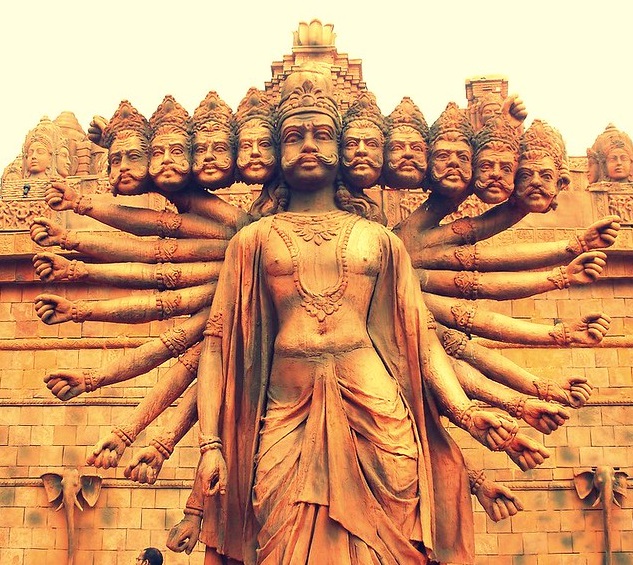
Ravana was a powerful king of demons with twenty hands and ten heads. He was considered as the most dreadful creature of the universe who can even change the planetary alignments. Ravana was one of the very intellectual demons who mastered all the holy scripts of Hindu mythology. He was killed by Rama as Ravana abducted Rama’s wife Sita to marry her. When Lord Rama killed Ravana, he was more than 12,00,000 years old.

Ravana was also the first astrologer of the whole world with immense knowledge of Spirituality, Warfare, Arts, Science, and Music. It is also believed that once he made Veena (classical music instrument) and tied his own intestine as strings to praise the Lord. He has the power to clone anyone and had 1 lakh sons out of which 99998 songs were cloned by him. Ravana was also never a teenager, when he was 8 years old his mother convinced his father to grow Ravana as an adult through a technique in which his father had expertise.

2. Putana 

Hindu Demon Putana

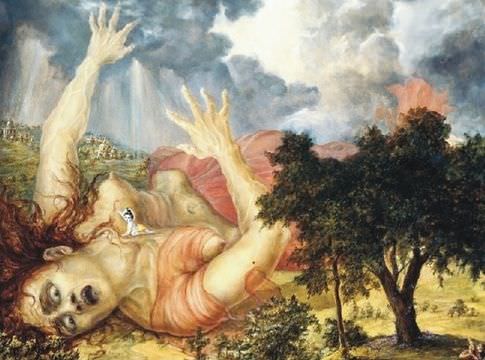
Lord Krishna appeared as a Supreme personality on earth to kill all the demons and protect all his devotees. Putna was the demoness who knew the art of killing infants through black magic. Putna dressed herself as a beautiful girl and entered the infant Krishna’s house to kill him.

All the women in the village thought that the beautiful girl had come to meet baby Krishna. When Putna entered the room, she saw Krishna lying on the small bed and took him to her lap. The wicked demoness has smeared poison on her breasts and pushed her nipple within his mouth. While she breastfed him, infant Krishna sucked the life out of her. She died of screaming and her body extended up to 12 miles which smashed all the trees and houses.

3. Mahabali 

Mahabali Hindu Demon

Mahabali was one of the very generous demon kings and everybody was very happy in his kingdom. He was a great worshipper of the Lord and wanted people to be happy in his kingdom.

Once Vamana came to his kingdom and asked for a piece of land that could be covered by his footsteps. Lord Vishnu has disguised himself as Vamana and when Mahabali promised to do so, Vamana increased his size. His footsteps covered the entire world and hence Mahabali asked Vamana to put his third step on his forehead and Mahabali eventually died. This day is celebrated as Onam in many parts of the world.

4. Shurpanakha 

Shurpanakha from Ramayana

Shurpanakha was a wicked demoness and was the sister of the demon king Ravana. She was very ugly and married to Dushtabudhi. Dushtabudhi was a very greedy person and wanted Ravana’s kingdom. Finally, he was killed by Ravana and windowed Surpanakha stayed with her brother Ravana.

Some years later she saw Rama and Lakshman in the forest and wanted to marry them. But both denied the proposal and she really got very angry. She even tried to attack Sita who was the sister in law of Lakshman, Lakshman got very angry and chopped her nose. There was an epic battle fought between them and Ram eventually won the battle. After few years Surpanakha died but the cause of her death is still unknown.

5. Tarakasura 

Tarakasura Hindu Demon

Tarakasura was an evil king who was a very powerful demon who defeated all his challengers and employed them as his servants. He praised the creator and obtained my boons. Tarakasura killed all the kings and innocent people.

According to his boon, he can only be defeated by Shiva’s son and Shiva had no child. Eventually, Shiva married Parvati and was blessed with a son Kartikeya. Kartikeya fought with Tarakasura and killed him and also killed both his brothers. Kartikeya is also known as Murugan and is worshipped in many parts of the world.

6. Kumbhakarna 

Kumbhakarna Demon

Kumbhakarna was a sleeping giant who could sleep constantly for six months. He had an enormous body size who could even eat the whole world. He was also a great philosopher and was never interested in committing any sin. Waking Kumbhakarna was considered as a tremendous task and no one dared to go near him.

His brother Ravana who was a powerful demon had kidnapped Ram’s wife to marry her. To woke him up for the war, one thousand elephants walked over him and finally Kumbhakarna was awake for the battle. He knew that his brother was wrong but fought for his brother. He even tried to convince Ravana that what he was doing was wrong. He destroyed the army in the battle but was finally killed by Ram.

7. Narakasura 

Hindu Demon Narakasura

Narakasura was a powerful demon who ruled Pradyoshapuram and even tortured the people of his kingdom. He kidnapped 16000 women and took pleasure in torturing them. He mercilessly killed sages and innocent people, unable to bear this torture, people approached Krishna.

Krishna wowed to fight for the people. Narakasura was cursed that only a woman can kill him. Hence Krishna along with his wife fought the battle and Krishna’s wife killed him in the battle. Naraka Chaturdashi is celebrated amongst the people from different parts of the world even today.

8. Raktabija 

Raktabija Demon

Raktabija was a demon with great strength and also had a very strange boon. According to his boon, whenever a drop of his blood fell on the ground then a duplicate Raktabija would be born. So it was very difficult to defeat him, no one ever dared to challenge him. Also, his power was increased to a thousand times whenever a drop of his blood fell on the ground. But Raktabija was challenged by Durga.

During the battle, his blood spilled everywhere and thousands of Raktabija were born. Finally, Kali Mata pierced the demon Raktabija and drank the flowing blood with her tongue. She drank every drop of blood before the army of Raktabija emerged.

9. Hiranyakashipu 

Hiranyakashipu Demon

Hiranyakashipu was the demon king who was very egoistic and wanted all the people to praise and worship him like the almighty God. The demon king thought that he was the creator of the universe and there was no supreme power to control him. The whole kingdom worships him but his own son refused to worship his father.

Hiranyakashipu even tried to kill his son but all his efforts failed. So he asked his sister Holika to set his own son on fire. But again his son came out of the fire unharmed. Hiranyakashipu was killed by Lord Narsingh and thus the evil got defeated. Hiranyakashipu who symbolized immortality and hatred came to an end and his son was the symbol of strong assurance and believer of God.

10. Mahishasura 

Hindu Demon Mahishasura

Mahishasura was a king who inherited the genes of both a demon and a buffalo. His father was the king of demons who were attracted to the beauty of a buffalo and eventually married her. They were blessed with a boy and named him Mahishasura (Mahisha means buffalo and Asura means a demon in Hindi). He was given a boon by Lord Brahma that no man on this planet could kill him, he can only be killed by a woman.

Mahishasura was very powerful and was confident that he is immortal. He thought that it is impossible for a woman to kill a man with so much strength. Due to this he started a war with the people and defeated them. Durga led a battle against him in order to stop Mahishasura. He met his death at the hands of a woman that fulfilled the prophecy.

Chidambaram Nataraja Temple Guide – Timings, Dress Code, and History

July 26, 2019, Sasidhar Darla Leave a Comment Filed Under: Tamil Nadu Temples Tagged With: Pancha Bhoota Stalam, Shiva Temples

Chidambaram Nataraja Temple in Chidambaram in Tamil Nadu is one of the Pancha Bhoota Stalas (the five Shiva temples). The main deity is in the form of Spatika Lingam – the sky element. Also, the 9 gateways of the temple signify the 9 orifices in the human body.

What is the history of Chidambaram Nataraja Temple?

The history of Chidambaram Nataraja Temple starts with the legend of Lord Shiva strolling into the Thillai Vanam. Vanam means forest and Thillai trees are a species of mangrove trees. In the Thillai forests lived sages who believed that God can be controlled using mantras and rituals.

 Lord Shiva walked in the forest with great beauty, assuming the form of Bhikshatana, a simple mendicant seeking alms. Vishnu followed him as Mohini.

The sages and their wives were enchanted by the beauty of Shiva. On seeing their womenfolk enchanted, the rishis got angry and invoked scores of nagas by performing magical rituals. However, Lord Shiva lifted the serpents and donned them as ornaments on His locks, neck and waist. Further enraged, the sages invoked a fierce tiger. But Shiva used its skins and dons as a shawl around His waist.

The rishis then gathered all their spiritual strength and invoked a powerful demon Muyalakan – a symbol of complete arrogance and ignorance. Lord Shiva wore a gentle smile, stepped on the demon’s back, immobilized him and performed the Ánanda Tandava (the dance of eternal bliss). It then disclosed his true form. Hence, the sages surrendered.

Adhisesha, the serpent who serves as a bed for the Lord, hears about the Ananda Tandava and yearns to see and enjoy it. The Lord blesses him, beckoning him to assume the saintly form of ‘Patanjali’. He then sends him to the Thillai forest, informing him that he will display the dance in due course.

When was Chidambaram Nataraja Temple constructed?

This temple is significant to the shaivites and is famous for its grand architecture. Also, the Sangam classics refer to Viduvelvidugu Perumtaccan as the chief architect of the temple complex. There have been several renovations in its history, particularly during the days of Pallava or Chola emperors in ancient and pre-medieval periods.

Perumtaccan of the respected clan of Vishwakarmas constructed and maintained the early structure of Chidambaram temple. The Chola king, Parantaka I laid the golden roof of the Chitambalam. In those flourishing times, kings Rajaraja Chola I and Kulothunga Chola I made significant donations to the temple.

he temple sculptures depicting the Thillai trees date back to the 2nd century CE. The word “Koyil” or temple in the Tamil Shaivite tradition refers to none other than the Thillai Natarajar Temple.

What is the significance of Chidambaram Nataraja Temple?

The significance of Chidambaram Temple is that it is one of the Panchabootha Sthalas and worships the Lord as sky or Aagayam. It is here that the hymns of three great Shaivite Saints were discovered. It is located at the Lotus heart of the Universe”: Virat hridaya padma sthalam.

Moreover, Lord Shiva is in three forms in Chidambaram, as visible idol form, formless as Akasha or space and form and formless as a Spatika Linga..

The spot where the Lord displayed the Ananada Tandava, the Ponnambalam/ Porsabai (Pon meaning gold, Ambalam/Sabai meaning stage) houses the Lord Shiva in his dancing form. The Lord is also hence famous as the Sabhanayakar, meaning the Lord of the Stage.

The Garbhagriha is a stage of the temple and houses the Lord in three forms. The “form” refers to the anthromorphological form as an appearance of Lord Nataraja, called the Sakala thirumeni; the “semi-form” – the semi-anthropo-morphological form as the Crystal linga of Chandramouleswarar;
the “formless” – as the Space in Chidambara Rahasyam, an empty space within the Garbhagriha, the Nishkala thirumeni.

What are the timings of Chidambaram Nataraja Temple?

Here are timings of Chidambaram Nataraja temple:

Day Timing
Monday 6:00 am – 12:00 pm
5:00 pm – 10:00 pm
Tuesday 6:00 am – 12:00 pm
5:00 pm – 10:00 pm
Wednesday 6:00 am – 12:00 pm
5:00 pm – 10:00 pm
Thursday 6:00 am – 12:00 pm
5:00 pm – 10:00 pm
Friday 6:00 am – 12:00 pm
5:00 pm – 10:00 pm
Saturday 6:00 am – 12:00 pm
5:00 pm – 10:00 pm
Sunday 6:00 am – 12:00 pm
5:00 pm – 10:00 pm
TimingsFromTo
Morning Darshan6 AM12 PM
Evening Darshan5 PM10 PM
Pal Nivedhayam6:30 AM
Maha Arati7 AM
kalashandhi Pooja7:45 AM9:45 AM
Irandam Kalaam10 AM 11 AM
Uchhikalam11:30 AM12 PM
Saayarakhshai5 PM 6 PM
Irandam Kalaam7 PM8 PM
Ardhajanam9 PM 10 PM

Which festivals are celebrated here?

Some festivals celebrated at Chidambaram nataraja temple are:

The 10 day Margazhi festival in December-January is one of the most important festivals that begin on the day prior to Tiruvadhirai star day with flag hoisting. The importance of the festival is that it is for Saivite Saint Manickavasagar.

The Vidayathi festival is both for the Lord and the saint.

The 10 day Aani Tirumanjanam festival begins with flag hoisting. It takes place 10 days earlier of Uthira star day. Also, from day one to the eighth day of the festival, procession of deities like Somaskanda, Shivananda Nayaki, Vinayaka, Subramania and Chandeswararm (panchamurthis) takes place in silver and gold vahans.

How to reach Chidambaram Nataraja Temple?

Here’s how to reach Chidambaram Nataraja Temple:

  • Air: The nearest airport is Trichy that is 195km away and Chennai that is 235 km away.
  • Rail: Local trains connect Chidambaram  to Trichy and other major cities of Tamil Nadu.
  • Road:  There are requent buses from Andhra, Karnataka, and Tamil Nadu to Chidambaram. Locally auto rickshaw is the best mode of transport.

Where to stay nearby?

Some places where one can stay near Chidambaram Nataraja Temple are:

  • Hotel Akhshaya at Gandhi Nagar, Chidambaram has comfortable accommodations for tourists visiting Chidambaram. It is 1.8km away from the Chidambaram railway station. Also, it has a wide range of comfort delicacies.
  • Hotel Lakshmi Vilas Heritage at T Neduncheri, Chidambaram is has a big complex. The hotel gives the tourists a chance to enjoy living in pollution free atmosphere. It is only 12 km away from the Chidambaram railway station.

What are some temples nearby?

Some of the temples near Chidambaram nataraja Temple:

  • The Thillai Kali Amman Temple is famous for its presiding deity who is Goddess Parvathi in the form of Mahakali. Moreover, the idol is truly lively and magnificent to look at.
  • The Tiruvetkalam temple is adjacent to the Anamalai university complex. It is also a great place to visit for its peaceful and resplendent structure.

Kumari Amman Temple Kanyakumari

September 15, 2019, Sasidhar Darla Leave a Comment Filed Under: Tamil Nadu Temples Tagged With: Devi Temples

Kumari Amman temple is 3000 years old and is for Devi Kanyakumari. She is the virgin goddess who stands strong protecting her devotees. She is “Devi” or “Bhagavathy” that refers to “Durga” or “Parvati”. Devotees also worship Devi as Bhadrakali.  The temple is on the seashore of Kanyakumari, Tamil Nadu.

According to popular beliefs, the Goddess removes the rigidity of our mind. Devotees actually feel the emotions in their mind when they pray to the goddess in devotion and contemplation.

What is the history of Kumari Amman Temple?

According to history, worship of Devi goes back to Vedic times and monotheism to Advaita times. Devi Kanyakumari finds mention in Ramayana, Mahabharata, and Sangam work Manimekalai. Devi Kanyakumari has a mysterious story that once Banusura, the demon king got power over Devas and gave cruel punishment to them.

The Devas performed a Yagna seaking to punish and remove the evils.  So Devi Parasakthi came to Kumari in the form of a virgin girl and began her penance. Meanwhile Lord Shiva fell in love with her and made arrangements for the marriage in the midnight on a particular day.

Now the Narada realised that their marriage would destroy the chances of castrating Banusura because only a virgin could kill him. When Lord Shiva was on his way to Kanyakumari, Sage Narada assumed the form of a cock and crowed falsely heralding the break of dawn. Thinking that the auspicious time for the marriage was past, Lord Shiva returned disappointed. The Goddess too decided to remain virgin after that. Then, when Banusura attempted to win the Goddess by force, she killed him with her Chakragudha, and relieved the sufferings of Devas. Then she resumed her penance and remained virgin.

What is the significance of Kumari Amman Temple?

Significance of Kumari Amman Temple is that it is one of the 51 Shaktipeethams – or divine abode of Goddess Shakti. One of the hundred and eight “Durga Alayas”, this Temple is for  Goddess Durga. Swami Vivekananda visited this Temple in December 1892, as told by Sri Ramakrishna Paramahamsa.

The nose ring of Devi Kanyakumari is designed with rubies. They are so bright that it could be seen even from the far at night.

It is said that some ships sailing in the sea, mistook the brightness of the rubies as the light from the Lighthouse and got wrecked, hitting against the rocks nearby. Due to this reason, the eastern side gate of the Kumari Amman Temple is kept closed.

The eastern door of the Temple is opened on new moon days in the months of Edavam, Karkkidakam (Capricorn and Cancer), during Navaratri and in the month of Vrischikam.

Walking around the outer corridor and crossing the Navaratri Mandapam, the pathway leads to the second corridor encircling the shrine. At the entrance here, is the Kala Bhairava Shrine and the well “Patal Ganga Teerth” which provides water for the Devi’s Abhisegham. After this is the Dhwajastambha (flag mast).

What are the Timings of Kumari Amman Temple?

Here are the timings of Kumari Amman Temple: 

Timings From To
Morning Darshan 6:00 a.m. 12:30 p.m
Evening Darshan 4:00 p.m. 8:00 p.m.

Which festivals are celebrated at Kumari Amman Temple?

Some of the festivals celebrated at Kumari Amman Temple are:

  • The Chaitry Purnima Festival occurs on the Full moon day in May.
  • The Navarathri festival occurs in the month of September–October. On the 10th day of the Navarathri, the Vijaya Dasami, devotees celebrate the destruction of Banasura.
  • The Vaisakha festival which is a 10 day festival in the Tamil Month of Vaikasi (May–June). Devotees take the image of the Devi around the town in procession, both in the morning and evening.
  • The Kalabham festival is celebrated in the Tamil month of Aadi (Karkkidakam) that is in July – August. The priest covers the idold with Sandal paste on the last Friday of the Tamil month (Aadi).

How to reach Kumari Amman Temple?

Here’s how to reach Kumar Amman Temple:

  • Road: visitors can reach the temple by taking taxis and auto-rickshaws . City buses also are regularly accessible. The temple is 1km away from Kanyakumari bus stop.
  • Rail: the temple is 1km away from the rail station.
  • Air: the temple also connects well to Chennai, Madurai, and Thiruvanathapuram.

Where to stay near Kumari Amman Temple?

Some of the places where one can stay near Kumari Amman Temple are:

  • Hotel Sangam is at Beach road, provides guests with a peaceful retreat that feels like a home away from home.
  • Singaar International Hotel at Main road, Kanyakumari is famous for it’s multi cuisine restaurant and well suited rooms.
  • Hotel Shivas Residency located 1 km away from the Kanyakumari Rail station is a good place to relax and enjoy the locale around.

What are some temples near Kumari Amman Temple?

Some temples near Kumari Amman Temple are:

  • You should definitely visit the Olakaruvi Falls once you have visited the temple. It has magnificent beauty and its surroundings are splendid to look at.
  • The Lord Subhramanya Temple is 34 km away from Kanyakumari and is for Lord Murugan who is the God of warfare and victory.
  • The Thanumaayan Temple is another temple famous for its architectural splendour. It is a 17th century Hindu shrine in the Suchindrum town of Kanyakumari. It is also famous as the Suchindrum Temple and Sthanumalayan Temple.

[wl_faceted_search]

Ranganathaswamy Temple Srirangam – Timings, Poojas, and History

August 8, 2019, Sasidhar Darla 1 Comment Filed Under: Tamil Nadu Temples Tagged With: Divya Desam, Vishnu Temples

Ranganathaswamy Temple, popularly called, the Srirangam Temple is dedicated to the reclining form of Lord Vishnu known as Lord Ranganatha. It is located in the Srirangam district of Tiruchirapalli (also known as Trichy), Tamil Nadu. The Srirangam Temple is one of the World’s Largest Functioning Temple.

People who get darshan at the Ranganathaswamy Temple, Srirangam, during the Vaikunta Ekadasi and Dwadasi days enter Vaikuntam (Heaven) and attain Moksha.

Srirangam Temple Video

Srirangam Temple – Facts

DeityLord Ranganathaswamy (Lord Vishnu)
LocationSrirangam, Tamil Nadu
Entry FeeFree
Best time to visitJune to October
Timings6:00 AM to 9:00 PM
Best Time to VisitSeptember to February
PoojasShani Pooja and Abhishekam
FestivalsRam Navami, Vishu

Srirangam Temple Timings

Here are the timings of Srirangam Temple:

RitualsFromTo
Morning Darshan6:00 AM12:00 PM
Viswaroopa Seva6:00 AM7:15 AM
Pooja12:00 PM1:15 PM
Darshan1:15 PM6:00 PM
Pooja6:00 PM6:45 PM
Darshan6:45 PM9:00 PM
Srirangam Temple is open from 6 am to 9 pm

Ranganathaswamy Temple History

Srirangam is popular for the eight shrines (Swayam Vyakta Kshetras) of Lord Vishnu that it contains. It is also the first of the 108 Divya Desams (Vishnu Temples). This temple is also popular as Thiruvaranga Tirupati, Periyakoil, Bhoologa Vaikundam, Bhogamandabam.

Ranganathaswamy Temple History

Sri Ranganathaswamy Temple Significance

Ranganathaswamy temple complex is 156 acres in extent. It has seven prakaras. There are also 21 magnificent towers in all prakaras providing a unique sight to any visitor. The temple complex consists of shrines of dozens of forms of Vishnu including Chakkarathazhwar, Narasimha, Rama, and Krishna.

Ranganathaswamy Temple Srirangam
Srirangam Temple Significance

One of the most important vows taken for Lord Ranganathaswamy is to perform “Thulabharam”.

How to reach the Ranganathaswamy Temple?

Here’s how to reach Ranganathaswamy Temple:

  • Air:  The temple is 15 away km from Tiruchirappalli Airport.
  • Rail: It is 10 km from Tiruchirapalli railway junction.
  • Road: “Rent a car” facility is available from rail, road and airport areas. 24 hours Bus Services are available from Tiruchirapalli Railway Station, the Central Bus Stop and Chatiram Bus Stop.

Srirangam Temple Accommodation

Some places where one can stay near Ranganathaswamy Temple are:

  • Hotel Deepam at W.B.Road, Tiruchirapalli is popular for its appropriate accommodation and good services. It has access to restaurants nearby and good transportation.
  • Hotel Mathura is another place to stay, located at Rockins Road, Cantonment at Tiruchirapalli is famous for its decent services and nice atmosphere.
  • Breezy residency at Mcdonalds Road, Tiruchirapalli, is popular for its good location from the Central Bus stop and railway station.
  • « Go to Previous Page
  • Page 1
  • Interim pages omitted …
  • Page 21
  • Page 22
  • Page 23
  • Page 24
  • Page 25
  • Interim pages omitted …
  • Page 57
  • Go to Next Page »

Contact Us

Contact Us

  • info@myoksha.com
  • About us
  • Contact us
  • Make a Payment

Terms & Policy

  • Terms of Service
  • Privacy Policy
  • Pricing Policy
  • Cancellation Policy

Copyright © 2026 Myoksha Travels

  • info@myoksha.com
  • About us
  • Contact us
  • Make a Payment